[Distill] the Smell of Glass
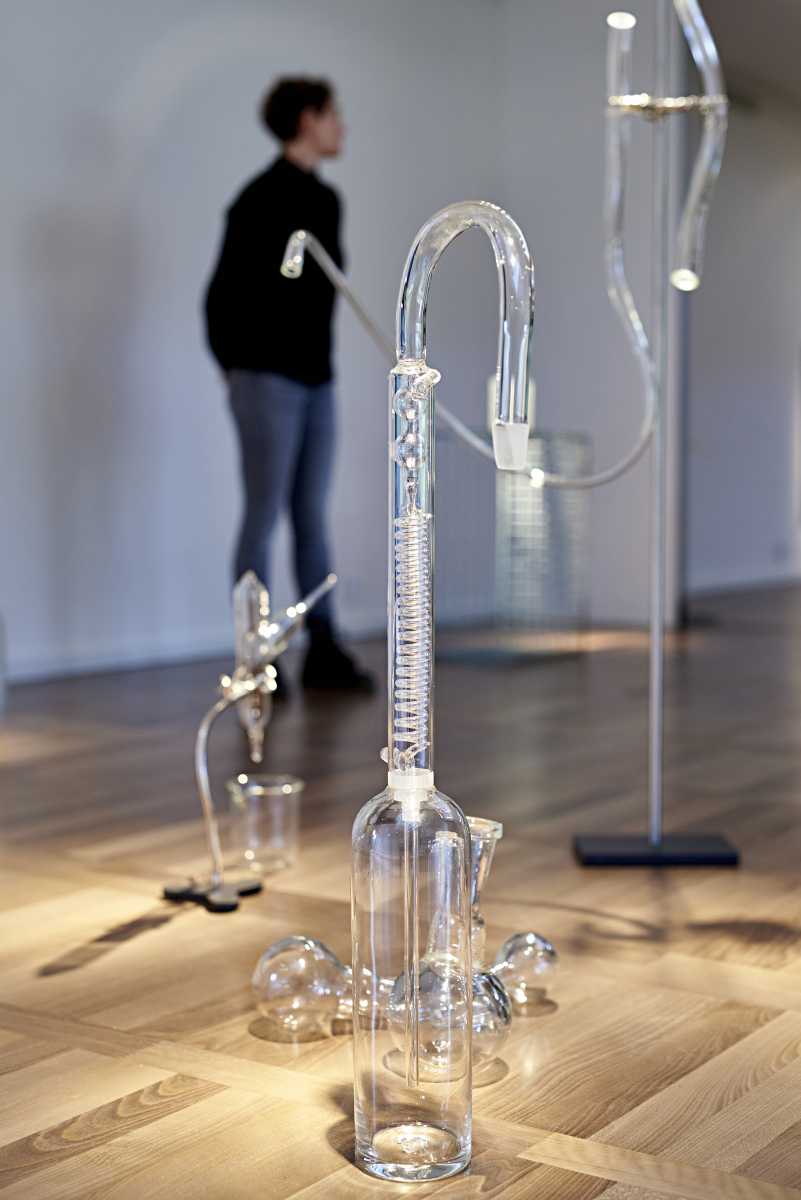
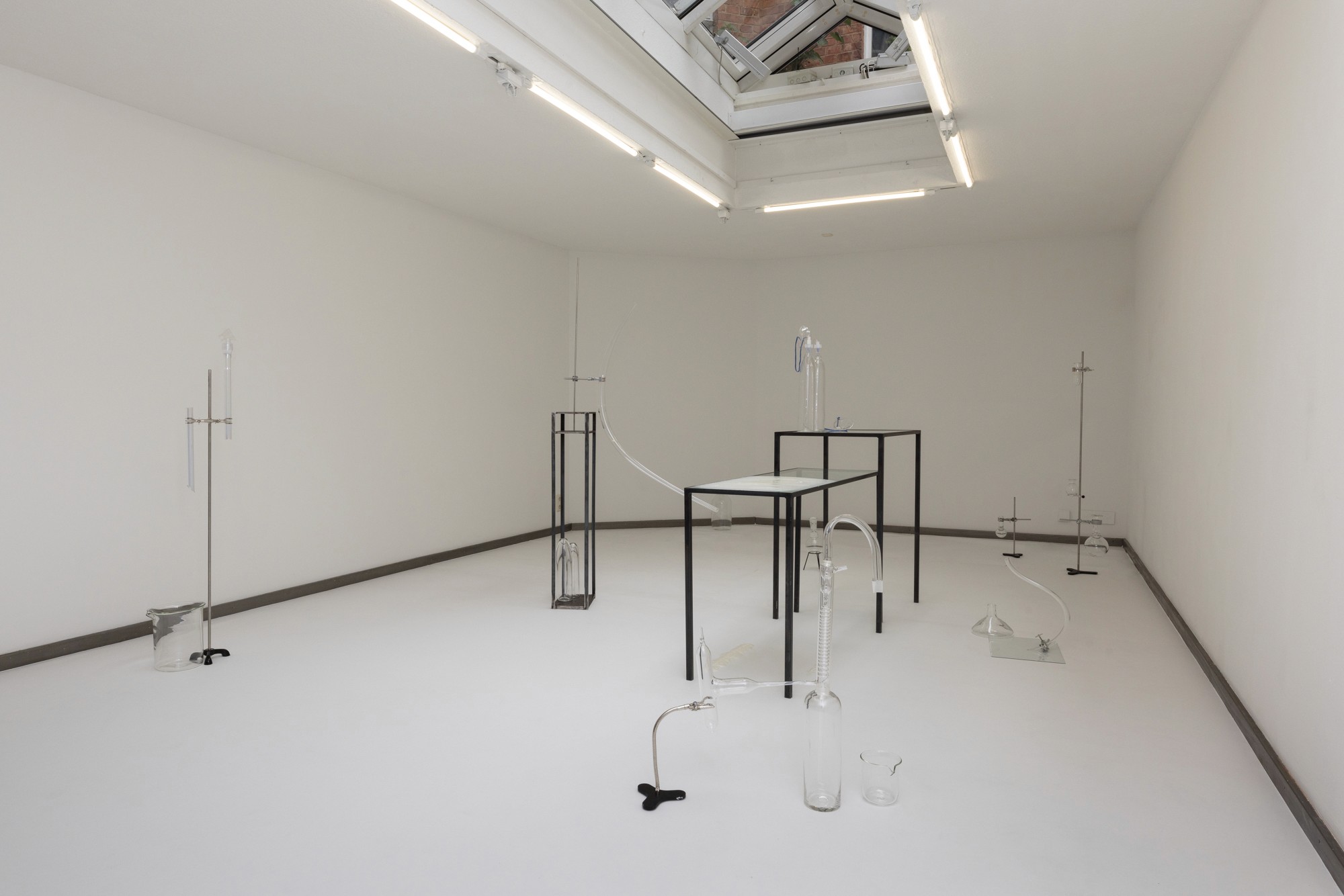
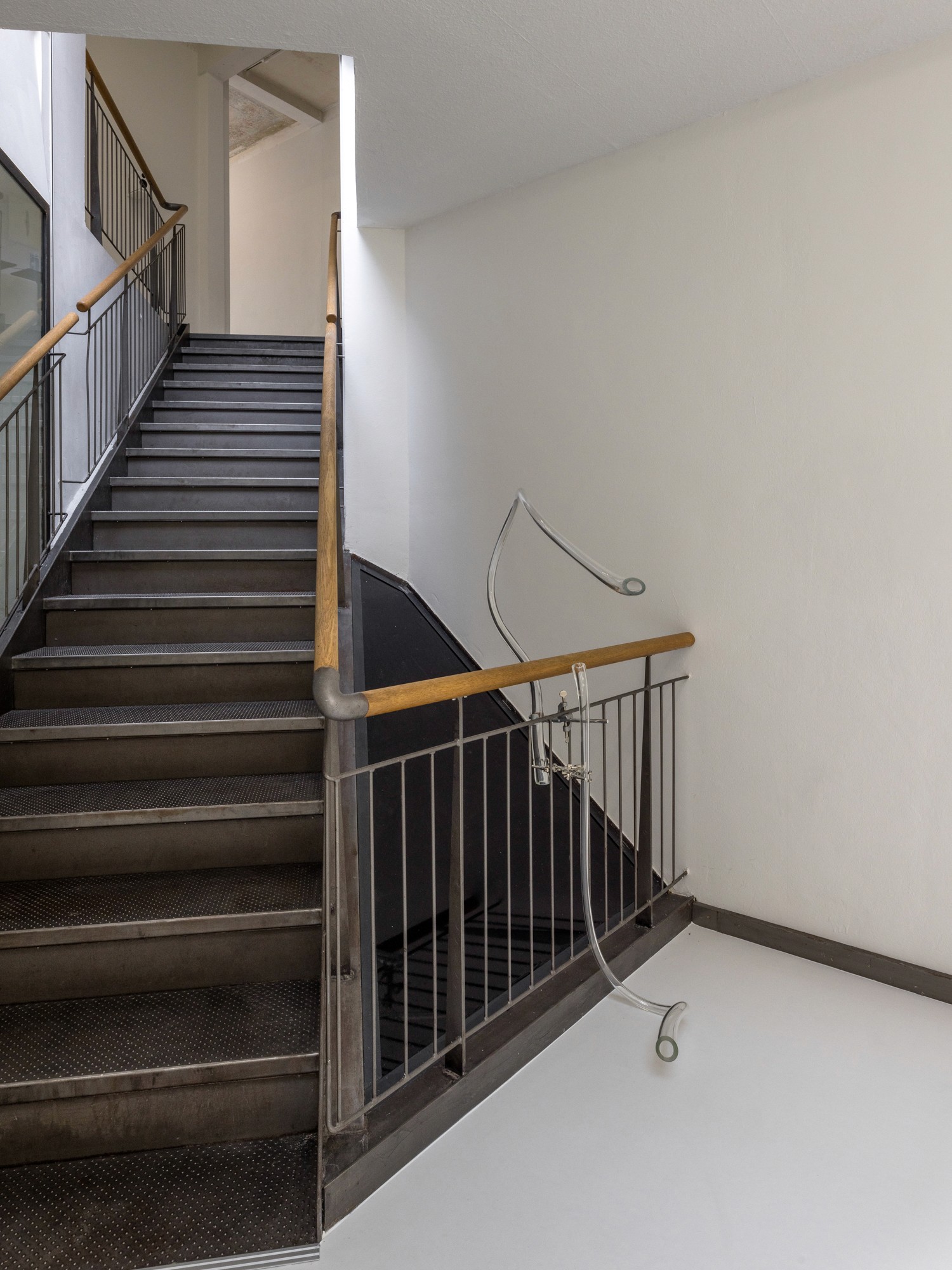
[Distill] the Smell of Glass is a sculptural approach designed to direct the visitor's perception to the liminal space between tangible and intangible experiences and phenomena. The installation constrains of transparent, colorless glass objects, which can visually be understood as laboratory instruments and instruments for distillation and perfumery use. Glass is used primarily as a carrier medium and for laboratory equipment. In her 2013 publication, Dehlia Hannah (p. 27) employs the example of the microscope to illustrate that the perception of scientific instruments as materials or objects is contingent upon their usage. "one no longer sees the instrument itself once one has learned how to see through it”, „[...] instruments, by their very nature, recede into their context of us and thus become transparent and invisible (Hannah 2013, p. 20).
In my installations [Distill] The Smell of Glass, I use the laboratory aesthetics, but turn this invisible aspect of scientific instruments into the visible space again. Thus, glass is made visible through its invisible attribute. The objects evoke the visual language of chemistry labs and distilleries, subtly suggesting the processes and purposes associated with such spaces.
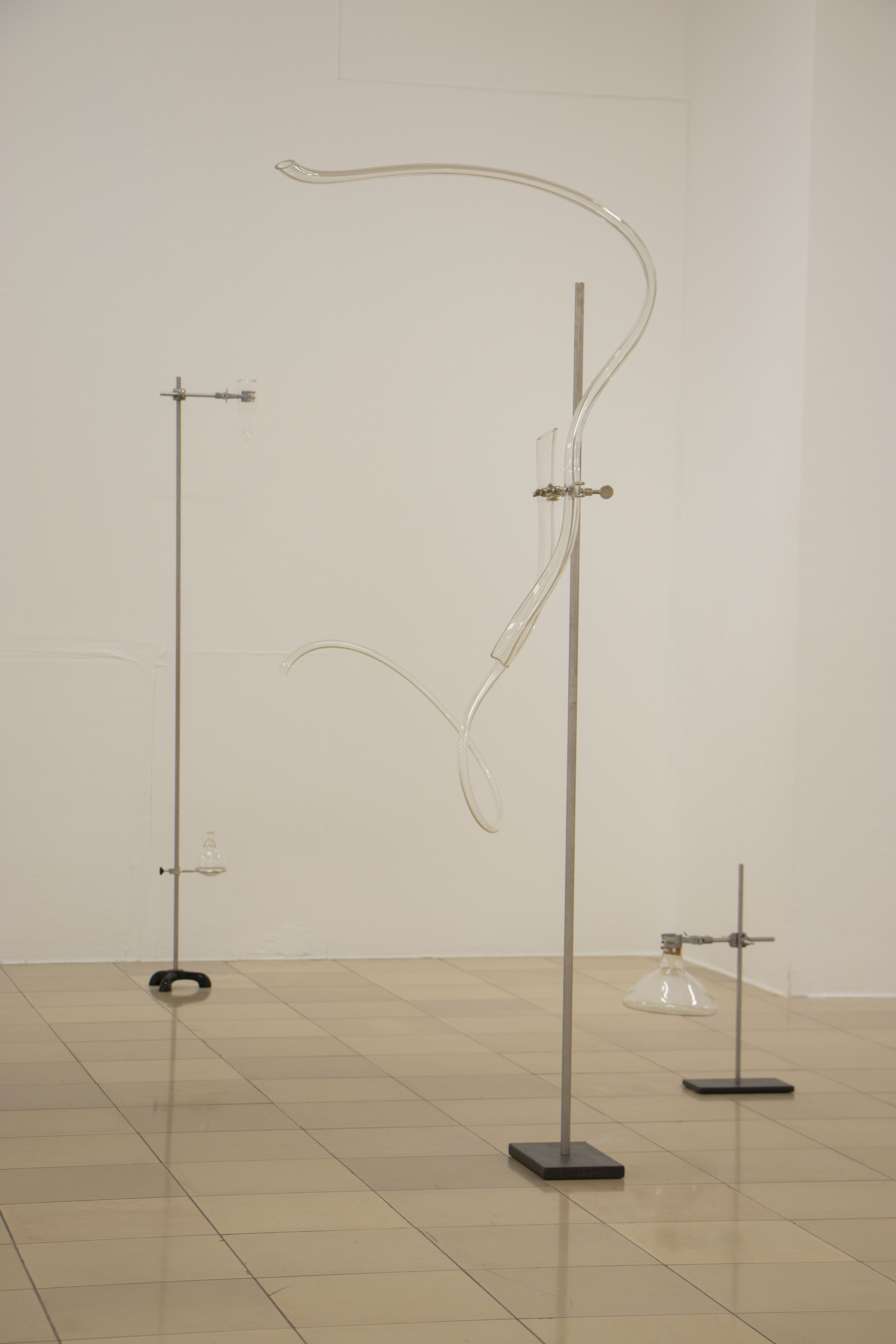
Aesthetically, the installation guides visitors through the unfolding of an ephemeral, immaterial substance. The strategic placement of objects leaves intentional gaps, inviting the viewer's imagination to fill these spaces and conceptualize an unseen, absent substance. With this imaginative process, the distillation process starts metaphorically: the visitor’s perception animates the scene, making the implied presence of an odorant substance tangible with the embodied mind.
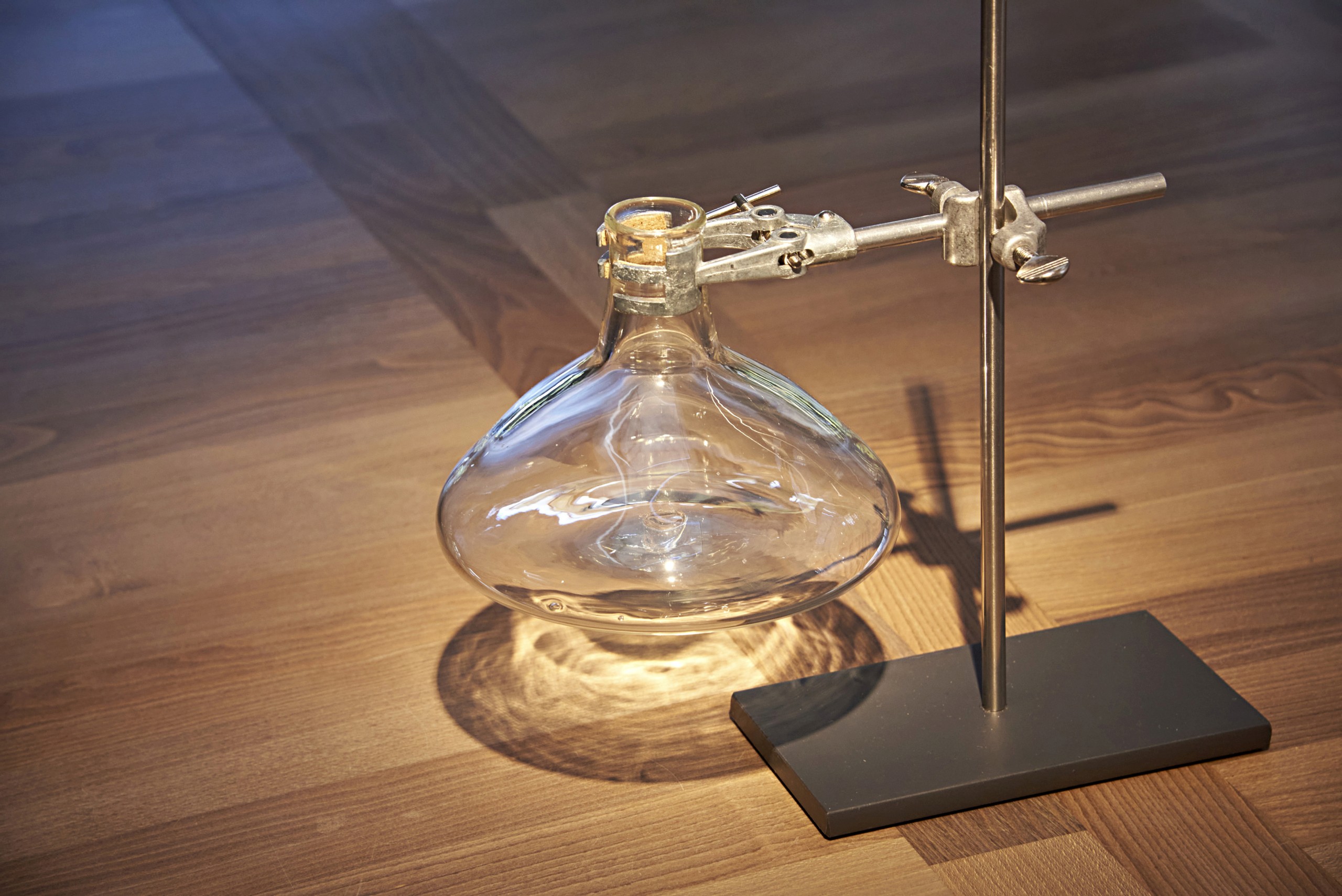
This installation challenges the conventional sensory experience by moving the perception with odor to a rather imaginative realm. Here, odors are not produced but are implied through visual cues and the symbolic arrangement of objects, creating an atmosphere where the idea of smell becomes present through suggestion and perception. For this sculptural approach, it is crucial that the laboratory instruments do not serve a functional purpose beyond their existence as artworks. While standardized elements like laboratory clamps maintain a sense of authenticity, the instruments and vials are handmade and not suitable for practical scientific use. Their role is solely to embody and convey the aesthetics of olfaction, acting as vessels for the conceptual exploration of smell as an invisible yet perceptible phenomenon.